Interactive Game: Projection Wall + iPhone
2
VERSIONS: WALL + PHONE
100
PHONE LEVELS
1
USB WEBCAM, NO DEPTH SENSOR
| Result | One game in two versions: a projection wall played with your shadow, and an iPhone game with 100 levels, now on the App Store. |
| My role | Designed and built both versions |
| Tools | JavaScript, USB webcam shadow reading, projector, Expo iOS, synthesized audio |
| The problem | Turn one ball-and-paint idea into a wall game played with your body and a phone game played by ear. |
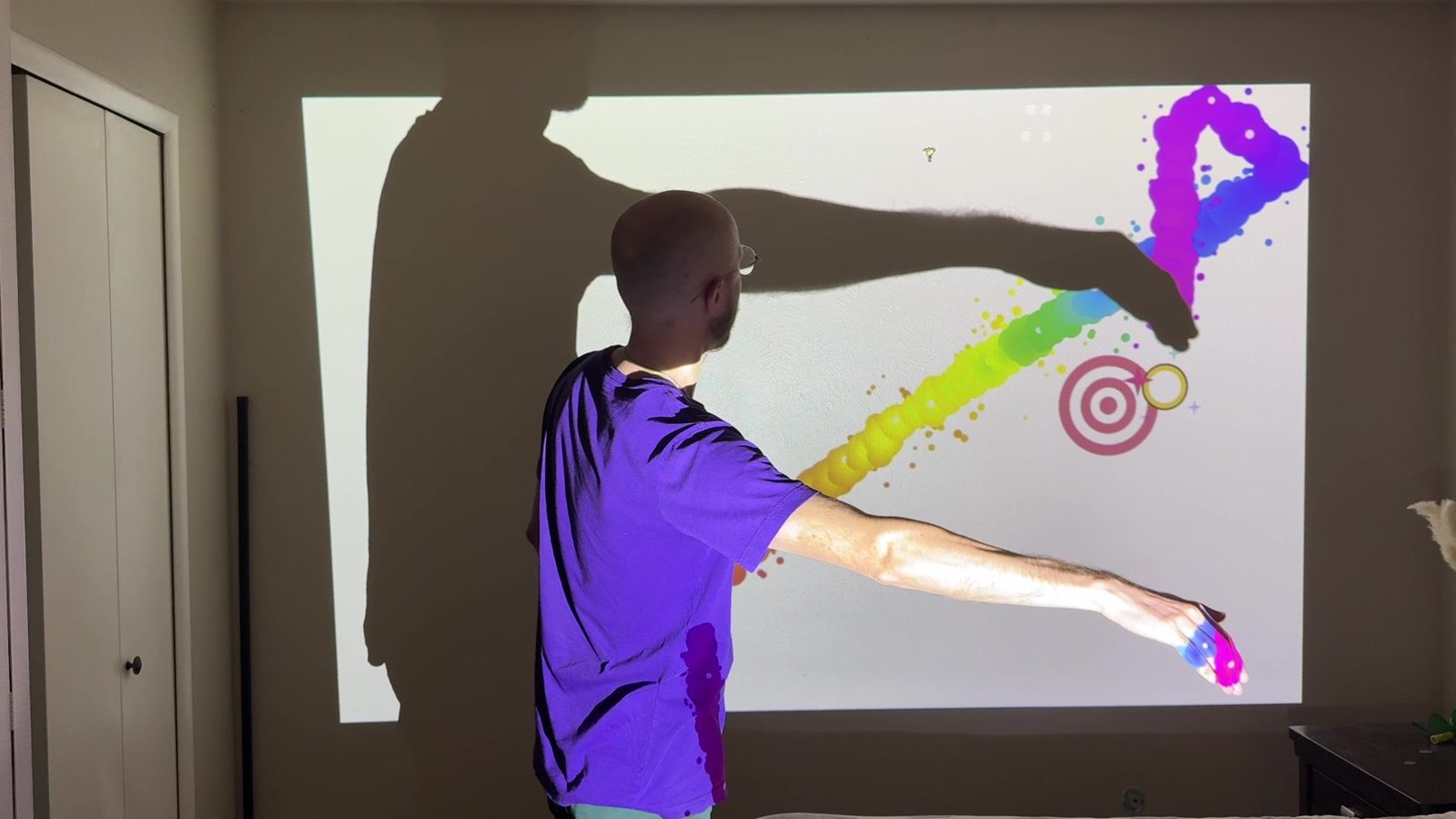
One idea, two screens. On a projection wall, your real shadow pushes a glowing ball toward a target and the ball paints the wall in neon as it goes. On an iPhone, you flick the ball through a level you cannot see, and everything it hits lights up in paint and plays a note.
The Wall Version
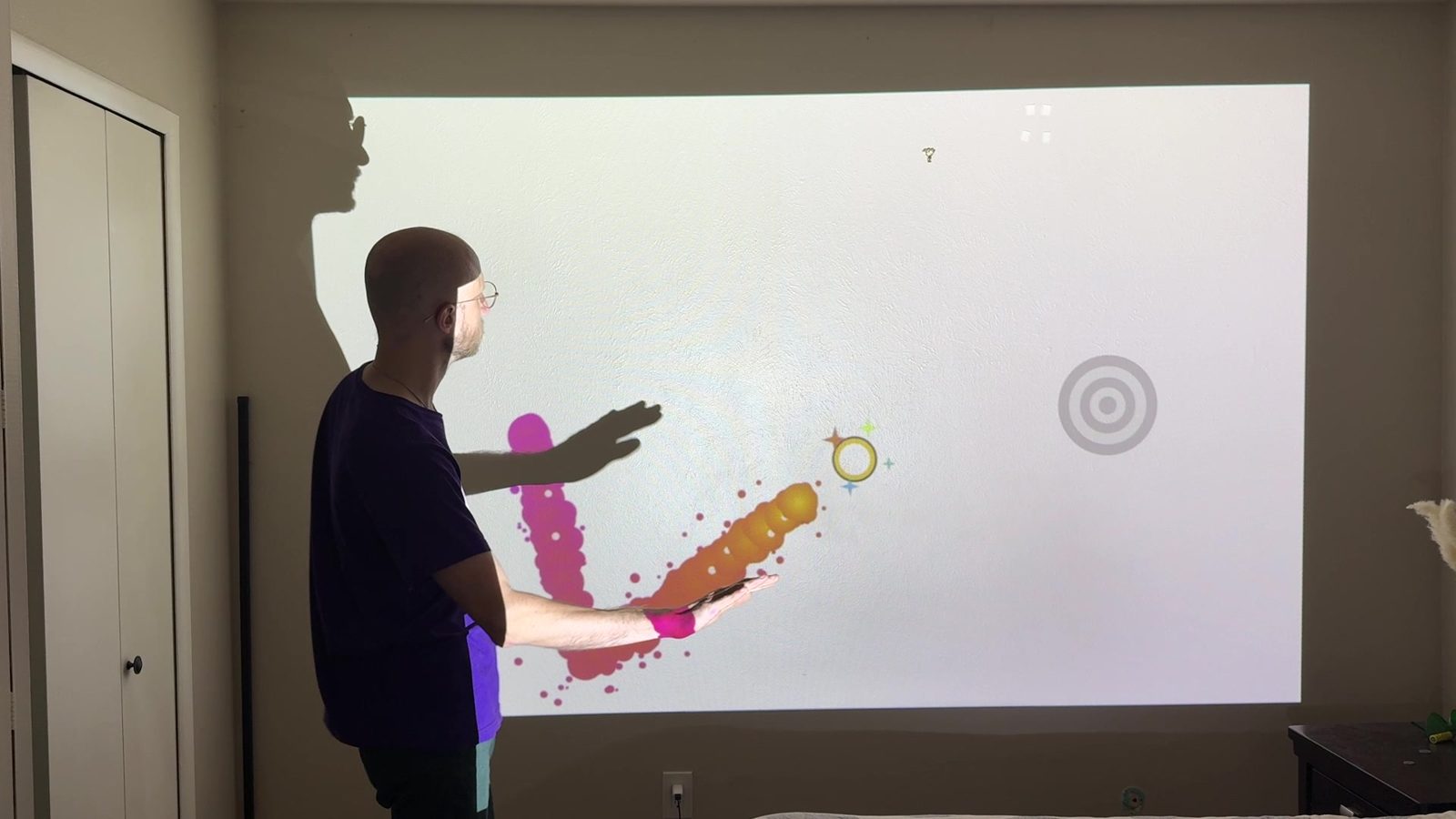
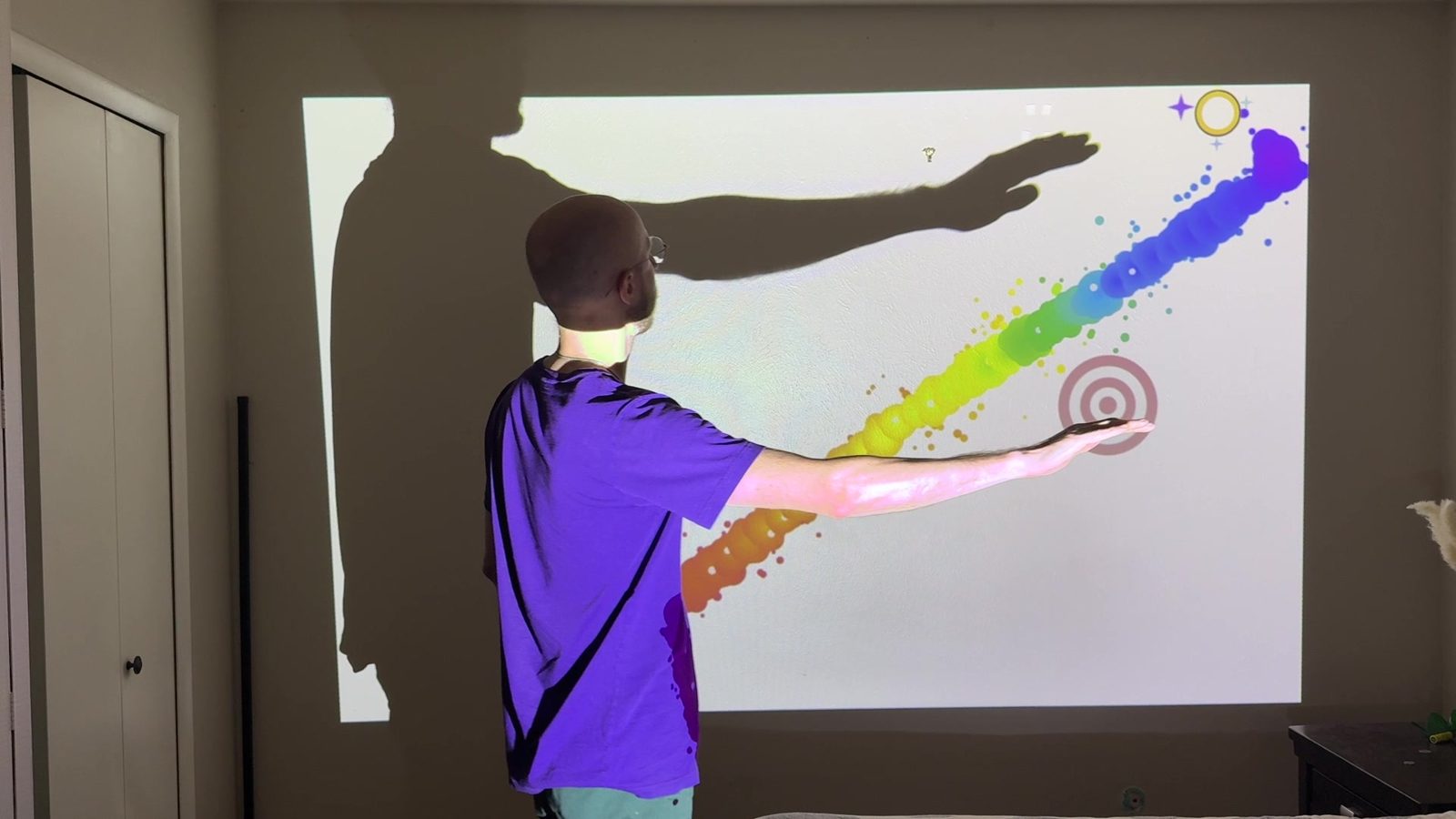
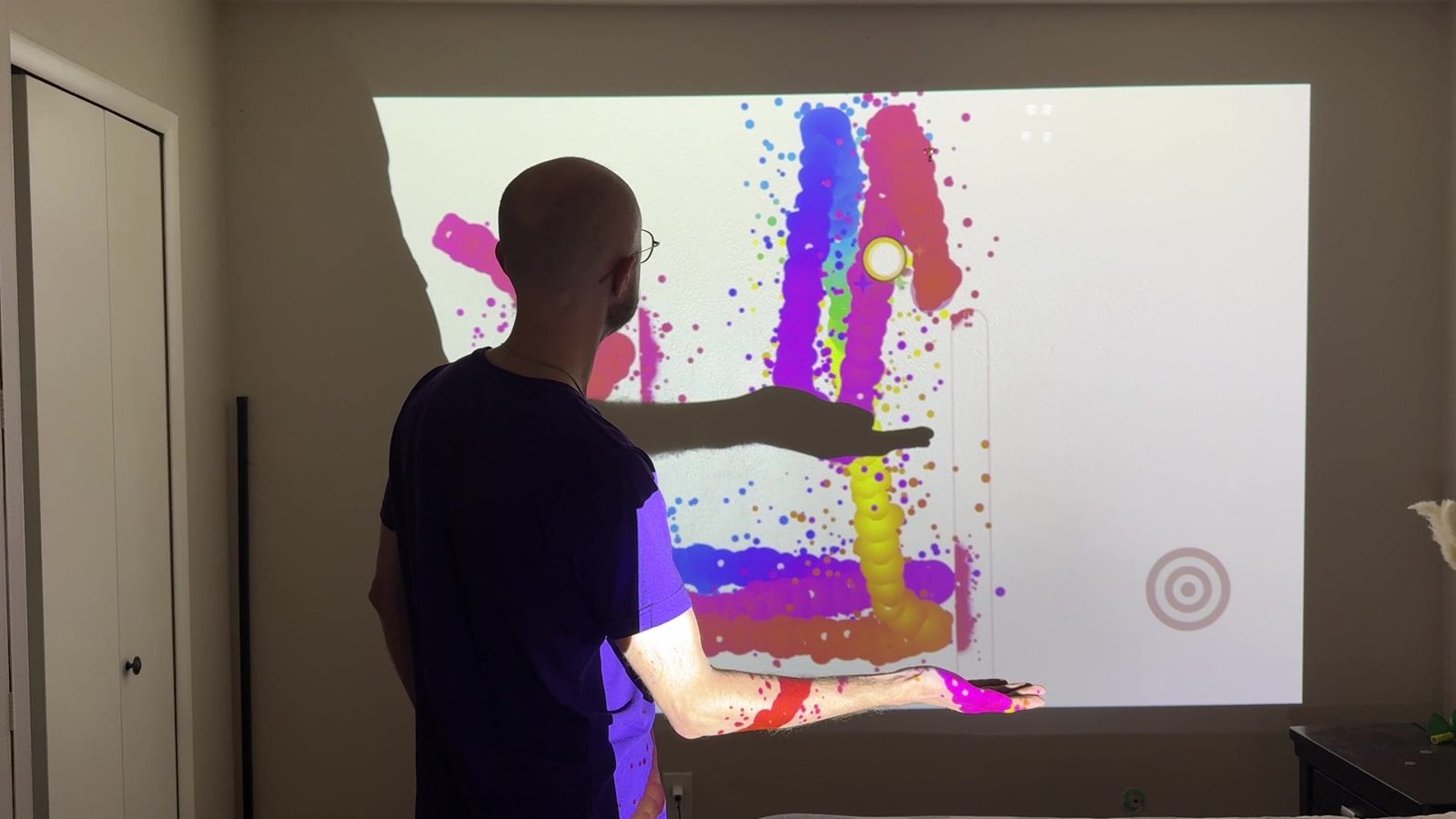
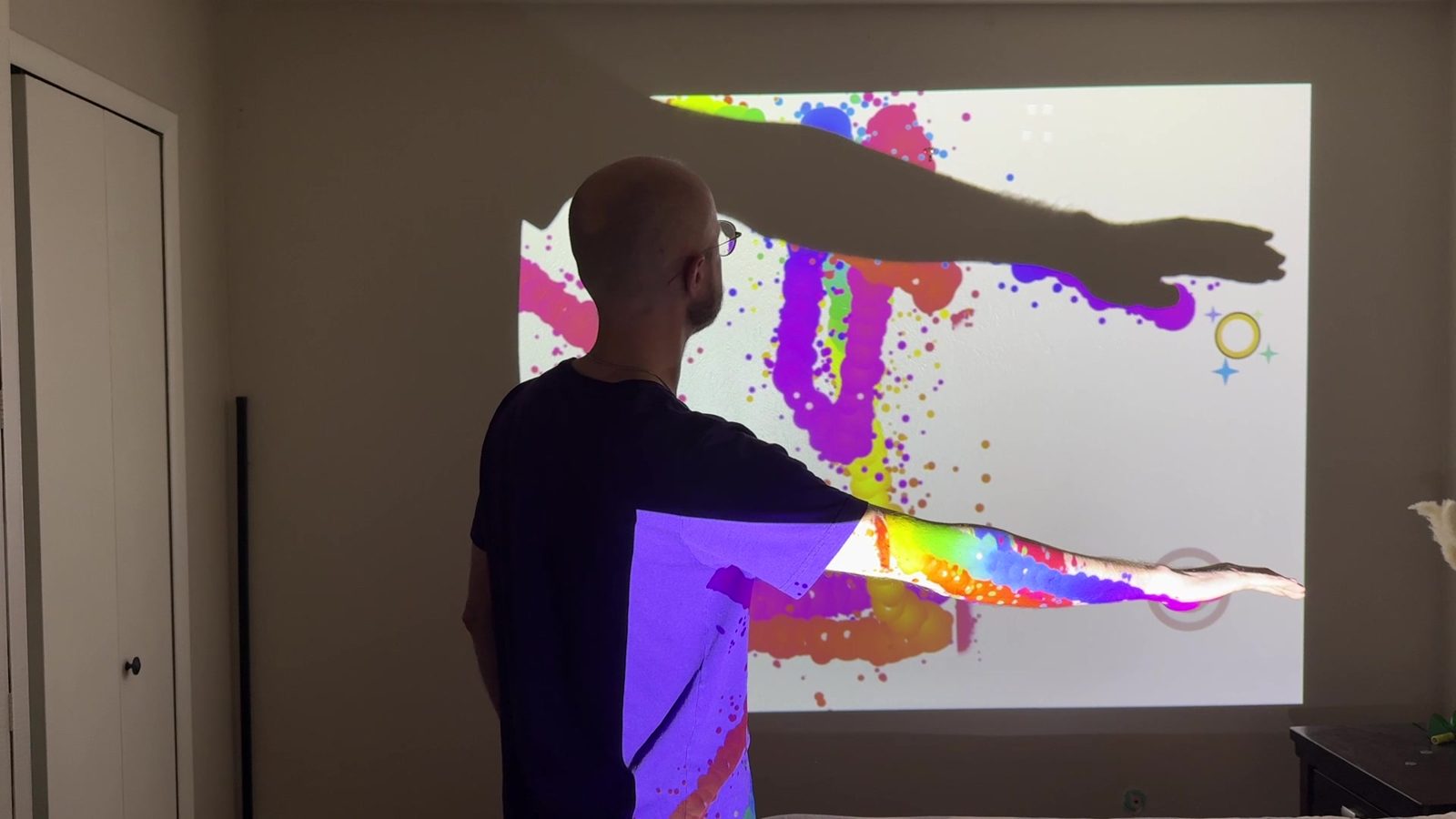
It started as Shadow Physics: a ball, walls and targets projected on a wall, and nothing to hold. A basic USB webcam watches the projection and reads your cast shadow, so a hand, an arm, a broom or a friend can bat the ball. In paint mode the ball leaves a permanent rainbow trail, so every round ends as a painting of how it was played.
Shadow as Input
The camera sits high near the wall, off the projector axis, so a player never blocks their own shadow. Dark pixels against the lit wall are read as shadow and turned into a force on the ball.
Self-Calibrating
Setup flashes the wall white, black and every game colour, learns a per-pixel white reference and finds the projection corners, so it adapts to the room light and the surface.
Readable Light
Nothing in the game is drawn darker than mid grey, so the only dark thing on the wall is a shadow. Bricks, pipes, switches and bumpers reuse my Gizmo Factory sprite art.
The Phone Version
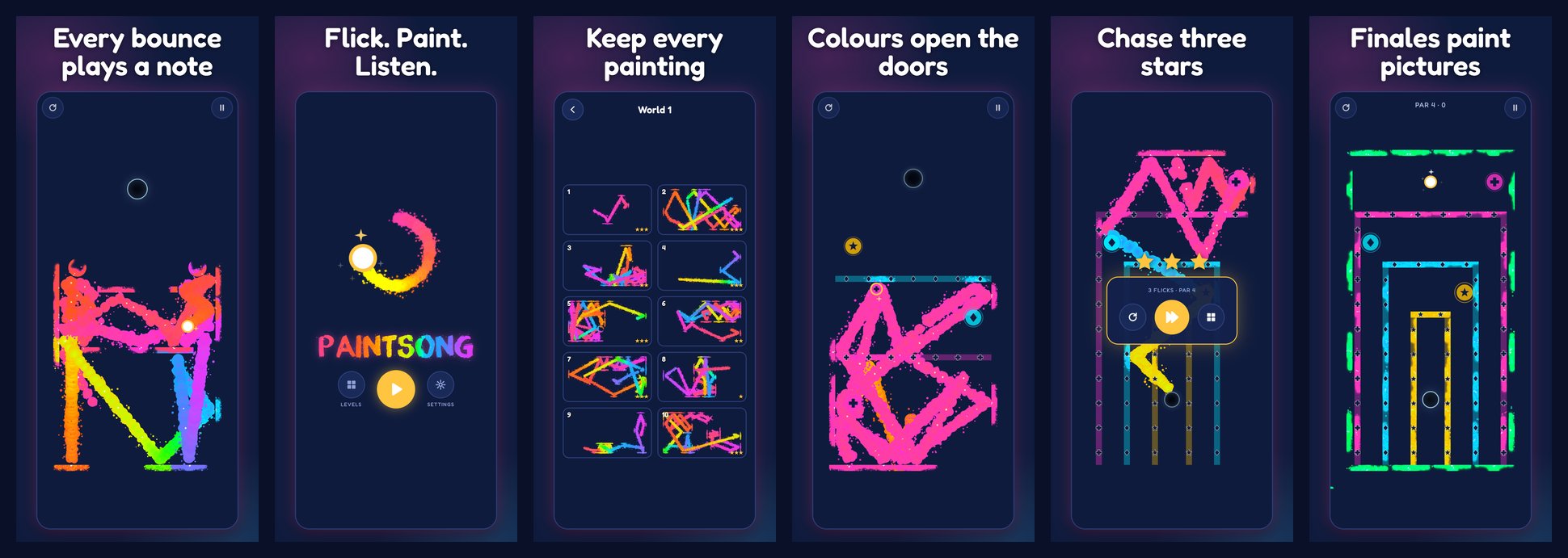
Paintsong Phone turns the same ball and paint into a pocket puzzle. Every level starts invisible. Drag back and flick, and whatever the ball hits gets painted and plays a note in the level’s key, so you find the room by sound and splash and then sink the ball in the hole.
Sound Design
Each wall owns one note from a minor pentatonic scale, so nothing sounds wrong. Walls, bumpers, small objects and the goal each have their own instrument, chosen to blend as one kit.
100 Levels
10 worlds of 10, each adding one mechanic: one-way gates, moving walls, portals, glass, colour locks, spinners, switches, currents and note locks. Each world ends on a finale that paints a picture.
Solver-Checked
A solver bot plays every level, proves it can be finished and sets the par for three stars. 167 automated checks run before any build.
Build
| Wall | Browser game, USB webcam shadow reading, projector, 24 levels |
| Phone | Same JavaScript physics and paint, in an Expo iOS shell with haptics |
| Audio | Synthesized per-object instruments, level key, playable with sound off |
| Access | Colour-blind modes with shape marks, calm tones, no ads, no data collected |
| Status | iOS 1.0 submitted to App Store review, October 2026 |
What I Learned
01
Light Is the Interface
On a projection wall the screen is also the sensor. Keeping every projected colour lighter than a shadow mattered more than any tracking code.
02
One Mechanic, Two Bodies
The wall is about your whole body and an audience watching. The phone is about precision and listening. Same ball, very different games.
03
Paint Is Memory
Permanent paint turned a physics toy into something people want to keep: a picture of the round they just played.
Want something like this for your venue, museum, or event?